JvH4848 heeft 143 reactie(s) geplaatst.
In short: Secluded world with rules different from ours in the secular world. Unusual dilemmas are worked around wisely and carefully. Three excellently performing main protagonists. SCORE 8/10
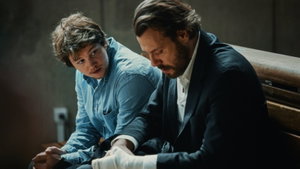
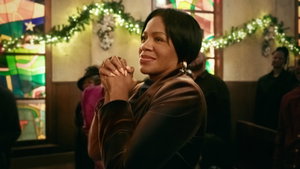
Saw this at the film festival Ghent 2025. Perfect impression of a different world we don’t know well enough, governed by strict rules we also barely know nor fully understand, yet shaping the lives of all who ever felt a calling and decided to enter a monastery, to stay there for the rest of their life. Several such rules are stretched to the limit in this story, if not to say worked around it to solve a situation. Unexpected issues at stake here are abortion and extra marital pregnancy, things far from compliant with people living full-time confined in a convent.
Casting and acting are excellent, not only mother superior (alias future mother Teresa) and Sister Agnieszka, but still more honorable mention is deserved for Father Friedrich who navigates wisely through all the dilemmas posed by Teresa and Agnieszka.
Seen at the film festival Gent 2025. Not sure what I saw. Lots of name dropping, mentioning people I should know, or at least heard of. Some of the names sounded familiar, but not sufficient to connect the dots, and certainly not enough to make a connection with me. Anyway, it was just 75 minutes. I counted only 1 walkout, after 10 minutes or so, and the rest stayed put until the end. Was I the only one bored?? It seemed so. Anyway, it offered no clarity on his work nor his methods. That he smoked much, was mentioned, but that was very common at the time (only nowadays do we see for real how much everyone smoked all day long). I cannot offer a score, since I’m certain I’m not the target audience for this movie. Illustrative, as mentioned in the previous paragraph, is that everyone else in the audience seemed interested, leaving me the feeling that I was the exception.
SCORE 9/10. Seen at filmfestival Gent 2025. This movie contains many interesting elements about repression and corruption. Especially the explanation in the train that the state must make an effort to catch a saboteur before he can execute his plan, did put me on the edge of my seat, more specifically when watching the finale as a logical result of their reasoning. Daunting prospect that a government nurtures concepts like that.
SCORE 6/10. Seen at IDFA 2025. Throughout the whole screening I was wondering what it was all about. It shows daily life in Kabul, once a heavily fought focus point in the film from the same director: Kabul, City in the Wind (2018). Now it is all very different: No war anymore, no fighting, just daily life in a city that once was heavily targeted. HOWEVER….
The Q&A with the director proved very useful, highlighting things that I overlooked. The movie starts with someone dressed as a fighter praying to be chosen to become a martyr. Another scene shows soldiers controlling traffic and checking cars for suspicious people, but it is all very calm and even boring for them, being the reason they kill the time with throwing balls or other pastime activities. A big contrast with the situation five years earlier, when heavy fighting was the norm. For these fighters, the current situation is an anticlimax. Only one single moment there is some excitement, when a woman is detected in one of the passing cars, without a mandatory family member next to her. Is she on drugs??
One pertinent question from the audience was that there was not a single woman in sight (except the one mentioned in the previous paragraph, but that was very unusual hence the excitement). Indeed, all women became invisible, as per policies gradually becoming more stringent in the last years.
Another phenomenon we see is that young boys learn long Quran verses by heart. But once asked if they knew what these verses were saying, blank reactions followed. A very rightful remark out of the audience was that it was no different from what we had to learn in the Roman Catholic Church before mid-20-th century, where Latin was the common language used (as an altar boy before 1960, I knew this all too well).
SCORE 8/10. Gezien bij IDFA 2025. Zeer verhelderende documentaire over iets wat door de meeste psychiaters, psychologen en gewone mensen niet serieus wordt genomen. Zoals bij de Q&A werd gezegd: als je bij de GGZ erover begint, stokt het gesprek, wordt je medicatie opgevoerd en wordt je naar huis gestuurd. Daar komt bij dat 20% van de mensen die stemmen horen, er geen last van hebben en dus ook geen oplossing zoeken. Het komt ook voor dat de stemmen bezwaar maken tegen zoeken naar therapie omdat ze vrezen verwijderd te worden. De getoonde therapie heeft meteen al waarde doordat de patiënt zich gehoord voelt, en niet met een pilletje wordt weggestuurd (eerder jarenlang geleurd met hun klachten). Uniek is hier ook dat de dienstdoende therapeut probeert in contact te komen met de stemmen, soms een of soms wel 20 verschillende, allereerst om ze een naam te geven en vervolgens hun kenmerken te weten te komen (hoe lang al, dominant, hulpvaardig, betweterig enz enz). We zien/horen er ook voorbeelden van.
SCORE 6/10 Gezien op IDFA 2025. Goed gemaakt en aardig om te zien, maar levert weinig nieuwe inzichten.
IN SHORT: Tension for 3/4 hours. Alas, none of the potentially promising scenarios came into being. The finale left us disappointed all over. SCORE 6/10
Beforehand we were being warned about elliptical storytelling, so amply prepared that facts would be withheld throughout the story and its developments. Indeed, our fantasy had to work hard to outguess what was going on, especially why these girls (three, later four) were held in that house, barred from seeing the rest of the world, except for a few excursions in the mall under supervision of a guard. No WiFi and no Internet, for starters, an inhuman restriction nowadays.
Once a fourth sister appeared, allegedly suffering schizophrenia, we thought we got a clue, but after her suicide we learned that she nor her illness were the core issue. Lots of alternative plots sprang to mind while watching, wondering why one would maintain such a secluded place for this household. Alas, the least interesting plot came about while the story progressed.
Eventually, Sarah got involved and was even drawn into real action. It did not help much that the three sisters were not united, and their disagreements threatened to destroy any planned action. Ultimately, we viewers were left empty handed, arriving at a very shallow plot and an even shallower finale.
The first three quarters of an hour were interesting. It succeeded in keeping our attention, assuming it would soon progress into real and relevant developments. Alas, this did not happen and ended in disappointment.
All in all, technically nothing wrong with acting or casting. I only missed some real contents. Not even a message or morale that I could take home. No forced marriage to ease an industrial merger, no divorce war with the natural mother, no pending danger that all three sisters were to become schizophrenic like the fourth, and many other possible scenarios that could have turned this into an interesting story. And we still are at a loss why Sarah was hired in the first place.
SCORE 6/10. Eerste driekwart uur is veelbelovend en houdt ons in spanning waarom Sarah eigenlijk is ingehuurd en wat er precies aan de hand is in dat afgelegen huis waar ze dagelijks heengereden wordt maar verder weinig grip op krijgt. Jammer dat diverse mogelijke scenario’s die in mijn fantasie ontstonden, allemaal afvallen. Het verhaal eindigt met een teleurstellende afloop, niet alleen voor de drie zusters maar vooral voor ons kijkers die voor niets in spanning gezeten hebben.
SCORE 6/10. Possibly lots of interesting topics covered, but I found it mildly relevant and missing all the good elements I saw described in synopsis (before) and reviews (after the screening). It is extremely well acted, that’s for sure, but the proceedings were all too surreal to keep my attention. The latter may be the reason that my focus dropped, having missed some important clues. Could not identify with either one of the protagonists. Also, the abundant bloodshed did not make it any better for me, even worse. Samengevat: goed geacteerd, vermakelijk, maar niet echt interessant.
SCORE 9/10. Seen at Movies That Matter 2026. Excellent portrait of two different worlds (rural, religious Zeeland versus metropolitan Amsterdam), especially the distance between both locations (“distance” in psychological and cultural sense, while physically only 150 km apart). We see film maker Koert Davidse collecting all material he can find about his brother Bart, who died 40 years ago from AIDS. Did his parents blame his “circles” in Amsterdam for his coming-out as being gay, and becoming involved in the usual free lifestyle at the time?? It all happened when most people were not aware yet how AIDS came about and what to do against it. From diaries that his father kept, we now know that Bart being gay was no secret for him. And the gesture his mother made to invite Bart’s fellow students to carry the coffin to the grave, was also a small sign that his mother was not hateful. There are many examples shown out of the collected memories on photo or video, rebuilding the picture for us how Bart lived and died. I think that here lies the real power of the film. The selected material perfectly shows daily life in those days, next to incurable AIDS that no one saw coming and in fact a death sentence once diagnosed.
SCORE 8/10. Seen at Movies That Matter 2016. Depressing images of people fleeing the water and the storms. They can go nowhere other than capital city Dhaka, that cannot really absorb so many refugees. An overarching story in this movie binds the many visuals, by showing one family whose house barely keeps standing. Mother and daughter (husband stays behind) decide to move to a sister in Dhaka. They arrive there using overly crowded boats and trains, if only to find a small room with everything else shared (kitchen, shower, toilet). All of this is shown from close by, for instance a near-conflict about the shared kitchen. Handling of trash and drainage are on the verge of collapse, due to the steadily growing population. Apart from the small-scale family story, accompanying comment throughout the whole movie is taken from a radio station. It proves very useful for us outsiders to explain the overall situation. Don’t expect all this to end in an unmitigated disaster. The family we more-or-less follow gets some work, and they seem to be able to send money to the husband who stayed behind. Near the end we see a protest demonstration that calls upon the rest of the world. All in all, the impact of climate change is illustrated very effectively in the first part of the documentary, while the second part shows the impact of mass migration to a place where already more than enough people are living in a confined area. No opinion nor conclusion is force-fed to us viewers.
SCORE 8/10. Seen at Movies That Matter 2026. Depressing thought that this really happens, and happened for many years already (ditto City of Joy (Madeleine Gavin 2016), seen at MtM 2018). It is a means of exerting power over people who don’t comply or otherwise don’t fit in with the desired standard of obedience to laws of economics or politics (or religion, for that matter). In a hefty scene in the beginning, we see how such an attack happens, making the whole family victim, thereby certainly dooming the woman who is often thrown out of the family and/or forced to marry the very soldier who raped her. Other family members are also seriously affected, by having to watch or even being forced to cooperate one way or another. I refrain from giving examples (not good for your nightly sleep). Luckily, the main content of the movie is about what our main protagonists do, both doctors and their staff, to repair the physical damage and offering the affected women a new meaning of life, a future, although it cannot be easy for the women to forget what happened to them. We see matters of life and death discussed on aspects where both doctors differ, e.g. aborting the child these women carry, who they say to hate before being even born. This makes watching this documentary worthwhile, apart from the new operating techniques applied and the respectful ways the women in question are approached. Also, small chance that something will change for the better, by showing political and other influences who want the status quo unchanged. On conclusion (like the 2016-documentary I mentioned before), nothing will change eventually as the powers of economics will prevail.
SCORE XXXX (undecided) Seen at Movies That Matter 2026. Beautiful underwater shots, colorful images of sea creatures, all of it being a hidden aspect of the ocean that we normally don’t see. I can imagine that it distracts from the message that the documentary wants to convey. Anyway, as became clear in the discussion and Q&A after the screening, what really is at stake proves to be even more complex than the film suggests.
SCORE 8/10. Bij IDFA 2024 zag ik The Battle for Laikipia (Daphne Matziaraki/Peter Murimi 2024) over een gelijksoortig onderwerp, maar toch heel anders, want de kolonisten waren daar de tegenpartij van de lokale herders. Die kolonisten woonden daar al eeuwen, en voelden zich net zo een met het land als de herders. Echter, klimaatverandering leidde tot droogte. Er was een oude wet die herders dan toeliet om hun schapen te laten grazen op de weiden van de kolonisten. Had eeuwenlang goed gewerkt, maar toenemende droogte leidde tot weerstanden bij de kolonisten die het ook moeilijk hadden met de droogte. Die film “The Battle for Laikipia” had als groot voordeel dat je beide kanten zag en hoorde. De film Kikuyu Land mist dat, en wordt zo bijna automatisch een David versus Goliath verhaal. Muggai had 17 (!!) binders met originele documenten (inmiddels gedigitaliseerd en veiliggesteld), en toch werd zijn zaak afgewezen. Immers, Unilever (de slechteriken in dit verhaal) bespelen (remote control, werd het genoemd) de regering en bijbehorende bureaucratie, en die op hun beurt gebruikt de lagere niveaus (zoals de field managers) om de werkers te laten produceren (ook seks was een van de “producten” voor de field managers), dit alles ondersteund met bewakers en communicatieafdelingen, die allemaal belang hebben bij de status quo. Demonstraties werden bruut onderdrukt; elke politieman kon zijn gang gaan tegen demonstranten (aldus president Ruto, net daarvoor herkozen). Extra pikant was dat hoofdpersoon Wangondu ontdekte dat haar grootvader ook aan de verkeerde kant had gestaan en had gewerkt voor de onderdrukkers (haar familie was ongelukkig met haar onderzoek, want zou familienaam bezoedelen als zij doorging). VERDER natuurlijk mooie beelden van de natuur. Maar ook wat zijpaden die niet bijdragen aan de centrale boodschap van het landje pikken, maar die wel schrijnend zijn zoals de situatie op de theeplantages. Helaas, de jongeman die mieren verzamelde, viel uit de toon want ook een soort machtsuitoefening, wellicht onbedoeld door de filmmakers. Opmerkelijk waren de plannen van de jongens over wat ze wilden worden (bijv. piloot), fantasie en onhaalbaar natuurlijk, maar het gaf een beeld van hun wereld.
Nederlands of Engels: Ik gebruik het door elkaar, afhankelijk van waar ik het opschrijf en/of waar ik mijn notities nog elders wil gebruiken. Op IMDB moet het namelijk in het Engels, terwijl het hier allebei kan.
SCORE 4/10. Seen at Movies that Matter 2026. Despite good intentions, no doubt, this movie is narratively a failure. We get isolated scenes, in very different locations, without a clear path from A via B to C that I could deduce. Some sidetracking made it worse, for example the horse race in the beginning (a dream, we were told) without any connection with what followed. There are more examples coming out of the blue and going nowhere, like the pushing crowd. Notwithstanding the synopsis that I read before, with many words devoted to the relationship between father and son, their encounters were only a small part of the runtime. Anyway, I missed explanations of how respective scenes connected, be it a voice-over or whatever tool there is for this purpose. Some of the time, the son filled these gaps, but it was far from sufficient for me.
SCORE 2/10. Gezien tijdens het filmfestival Gent 2025, onderdeel van de officiële competitie. Vond het weinig interessant, en vroeg me de hele looptijd van ruim tweeëneenhalf uur af of dit wel ergens over ging, en zo ja wat we ervan moesten leren. Maar ik ben bevooroordeeld, want opgegroeid op een soortgelijke boerderij met historie, niet alleen verstopt in de gebouwen maar ook via de verhalen van ouders/ooms/tantes/oma’s/opa’s die eeuwen omspanden. Misschien werden er in deze film ook gedenkwaardige dingen verteld, maar de verhaallijnen vond ik verwarrend en kon slecht volgen wat er gebeurde en waarom. Kortom, voor mij een tegenvaller. Vanuit mijn verleden had ik meer ervan verwacht. Veel reviewers leggen de nadruk op de ondergeschoven rol van de vrouwen, maar ik zie dat niet terug in mijn familiehistorie en ik denk dat de film wat dat betreft gekleurd is door moderne (na 1970) inzichten.
SCORE 8/10. Seen at Filmfestival Gent 2025, where it was part of the official competition. Several tense moments, not only due to the outside war zone but also within the volunteer community, arguing about following the rules agreed with the IDF and the many layers in between to get a “green light” zone, versus ignoring those rules to gain time and rescue a child in need.
SCORE 7/10. The film title Sirat is very appropriate, as explained in the beginning of the story, being a very thin thread between heaven and hell, and sharp as a sword too. We see a father and son on a desperate lookout journey for their missing daughter/sister, deeper and deeper in the desert, the latter being an unwelcome environment for strangers who are unfamiliar with its dangers. The desert is infamous for taking no prisoners and mostly yielding a fatal outcome for those who are unprepared. This movie offers a mostly tense story, switching between nearly desperate situations and uplifting scenes demonstrating companionship and other positive human features, and that Da Capo.
SCORE 9/10. Gezien bij IFFR 2026. Over man die hypotheek agent in gijzeling nam, en voor TV/radio en telefoon zijn situatie bepleitte. Speelde in US in 1977. Laat diverse aspecten van de zaak zien, terwijl die zich ontwikkelt vanaf moment van gijzeling. Belangrijke rol voor radio en TV.
SCORE 6/10 Gezien bij Movies That Matter 2026. Aardig om te zien, echter geen eye opener. Goed overzicht wat je zoal tegenkomt als vluchteling met ambitie. Bij een officiële bijeenkomst in Brussel zien we hem als enige zwarte tussen alle blanke brouwers. Hij is nu erkend en wordt ook door iedereen herkend als brouwer. We krijgen ook informatie over zijn voorgeschiedenis, hoe hij uit Burundi is gesmokkeld door de directeur van een middelbare school. En de professor die vertrouwen in hem had bij zijn opleiding in België. Duidelijk is te zien hoeveel obstakels hij heeft moeten overwinnen om te komen waar hij nu is. Twee voorbeelden: (1) Bij de opleiding in België wou geen van de medestudenten met hem werken. (2) Hij was de enige van zijn klas die cum laude afstudeerde, maar zijn CV werd “verscheurd” (zo noemde hij het) want bij de grote brouwerij in Burundi namen ze toch liever Europeanen aan, want “die weten meer”. Wij zien veel beelden uit Burundi, landschappen alsook dorpen/steden, als begeleiding bij het verhaal over de opbouw van zijn brouwerij. Hij laat zien waar het bronwater vandaan komt dat over een riviertje van 7 km lang naar de brouwerij wordt geleid. Dat alles slaat op zijn beginjaren aldaar, waar hij nu terugkomt met chauffeur en een particuliere beveiliger, dus duidelijk symbool van de geslaagde zakenman. Hij wordt overal goed ontvangen. De mensen die wij zien, zijn in elk geval trots op hem. We zien kleurrijke taferelen. We zien ook dat het niet eenvoudig is om te concurreren tegen een bestaande partij, die bijvoorbeeld bareigenaren bedreigt als ze van leverancier willen veranderen.
SCORE 7/10 Seen at the filmfestival Gent 2025. Three story lines, confusing. I’m not sure the film makers really wanted us to be confused, but it happened to me anyway. Firstly, it started as social commentary on censorship and limitations on artistic freedom, as in many other Islamic countries where “western” tendencies are discouraged (at best) or forbidden or punished (at worst). Secondly, throughout the whole story, we see several extra-marital relationships develop with all the usual complications. Thirdly, later in the story, emphasis shifted to power abuse and methods to let people do something they don’t want, but are being “convinced” after e.g. a relative is arrested or “fallen off a balcony”. Said machinations were necessary while preparing an assassination of the president. Whatever purpose the film makers had, our main protagonist stars in every one of the three building blocks. Is this just a one-man-show for George Fahmy, as he is in the center of each and every scene?? None of the other characters you feel connected with; none show some depth and their purposes are not revealed either. In other words: none but the main protagonist are really interesting.
SCORE 6/10. Gaf voldoende stof om mijn aandacht vast te houden, maar het raakte me niet en ik bleef een buitenstaander. De fragmenten met de respectievelijke opdrachten waren mogelijk relatief te kort om betrokken te raken bij degenen die hem hadden ingehuurd. Anderzijds is het mogelijk ook mijn fout om deze film te kiezen, want ik zie zelden iets in familierelaties en de problemen daaromheen. Kortom, goed gemaakt, goed ge-cast en goed geacteerd, maar inhoudelijk deed het me niet zo veel. Misschien alleen de scene met de dochter die achteraf vroeg “Had je misschien toch mijn vader willen zijn?”
SCORE 6/10. Seen at Movies that Matter 2026. The growing relationship between classmates Alec and Nina is certainly cute, originally caused by a school assignment. It is especially interesting given the very different backgrounds wherein they grew up. A perfect combination with Alec’s fruitless attempts to firstly hide his father’s business from Nina, and (after that came out) secondly hiding his role therein that surpassed the involuntary bystander by far. On the other hand, with the respective parents I feel not a single connection. I have the impression that these parents are invented to give the story an unusual element, something different from other coming-of-age plots. It may be intended to attract extra audience who will be intrigued by film title and synopsis. Hence my middle-of-the-road score. The movie itself is technically well-made and well-acted, but overall not so interesting as it seemed upfront when reading the announcement.
SCORE 6/10. Seen at Movies that Matter 2026. Compliments for the achievement, similar to Boyhood (Linklater 2013) in gathering so much material, covering so many years, thereby succeeding in giving all family members enough attention. On the other hand, there is a difference, condensed in the mother’s statement in the beginning, that there is nothing worse than brothers fighting each other, with no chance of reconciliation. A family spreading over the world is also something extra that Boyhood did not have. Anyway, I found it neither interesting nor compelling to follow the family members in subsequent stages in their lives, the same conclusion I wrote earlier about Boyhood. The only interesting aspect of this documentary were the field shots, where we saw everyone busy with the war and its fallout.
Meer nieuws
Netflix Pathé Thuis Disney+ Prime Video CANAL+ NPO Start Apple TV HBO Max Viaplay Videoland Cinetree Film1 CineMember Picl SkyShowtime MUBI
Meer beoordelingenReacties Populaire filmsPopulaire series
Meer populaire films
Meer populaire series